


2-modified%20(1).png)
.webp)
Too high and you lose the gig.
Too low and you resent the work by week two. And because most of us learned our rates by guessing, copying a mate, or just seeing what stuck, there's a good chance the number you're charging today isn't the number you should be.
A quick note on AI:
AI has changed the conversation around creative and marketing work. That's not up for debate.
Some small businesses use it for first drafts, basic image generation, or simple automations. Fine. But most are time-poor. Prompting a tool well, recognising quality output, and folding it into a real workflow takes expertise.
The freelancers winning gigs in 2026 aren't competing with AI. They're the ones using it faster and better than a business ever could. They have the eye to know when the output lands and when it doesn't.
Without further ado, here's what the market actually looks like.
Freelancer rate ranges in Australia
The honest answer: it depends on a lot more than your skill level.
Before any numbers, one truth worth sitting with: rate ranges in Australia are wide. A freelance graphic designer might charge $60/hr. Another, with similar years of experience, charges $180.
Both are getting hired. The gap isn't always skill. It's positioning, confidence, and how clearly they communicate value.
That said, knowing the band matters. You can't position yourself within a range you don't know exists.
A couple of caveats before the numbers.
These are guide ranges only. Experienced freelancers with strong portfolios, niche specialisation, or agency backgrounds will often charge above these figures.
Current economic conditions mean some clients are shopping more conservatively, and freelancers may feel pressure to meet them there. But discounting on rate rarely ends well for either side.
Here's a rough picture of what Australian freelancers are charging across common marketing categories:
Graphic design and creative
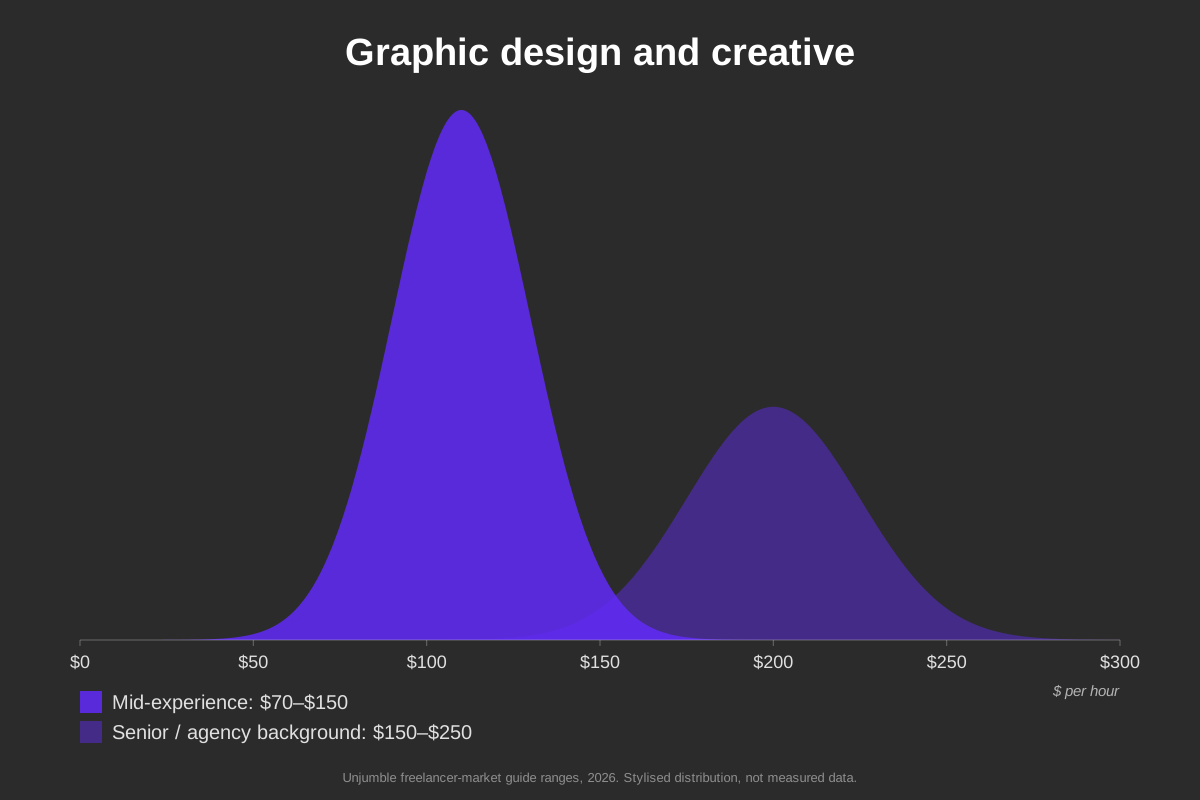
Logos, brand identity, social assets: $70–$150/hr for mid-experience freelancers.
Senior brand designers and those with agency backgrounds regularly charge $150–$250/hr.
Logo-only gigs are typically $1,500–$5,000 depending on scope.
Full brand identity (logo + colour + typography + brand guide): $5,000–$15,000.
Web development and front-end
Web development has shifted toward web design in recent years. Platforms like Shopify, Webflow, and Framer have made getting a decent site off the ground fundamentally easier. But complexity, integrations, and performance still take real expertise, so the rates haven't dropped much.
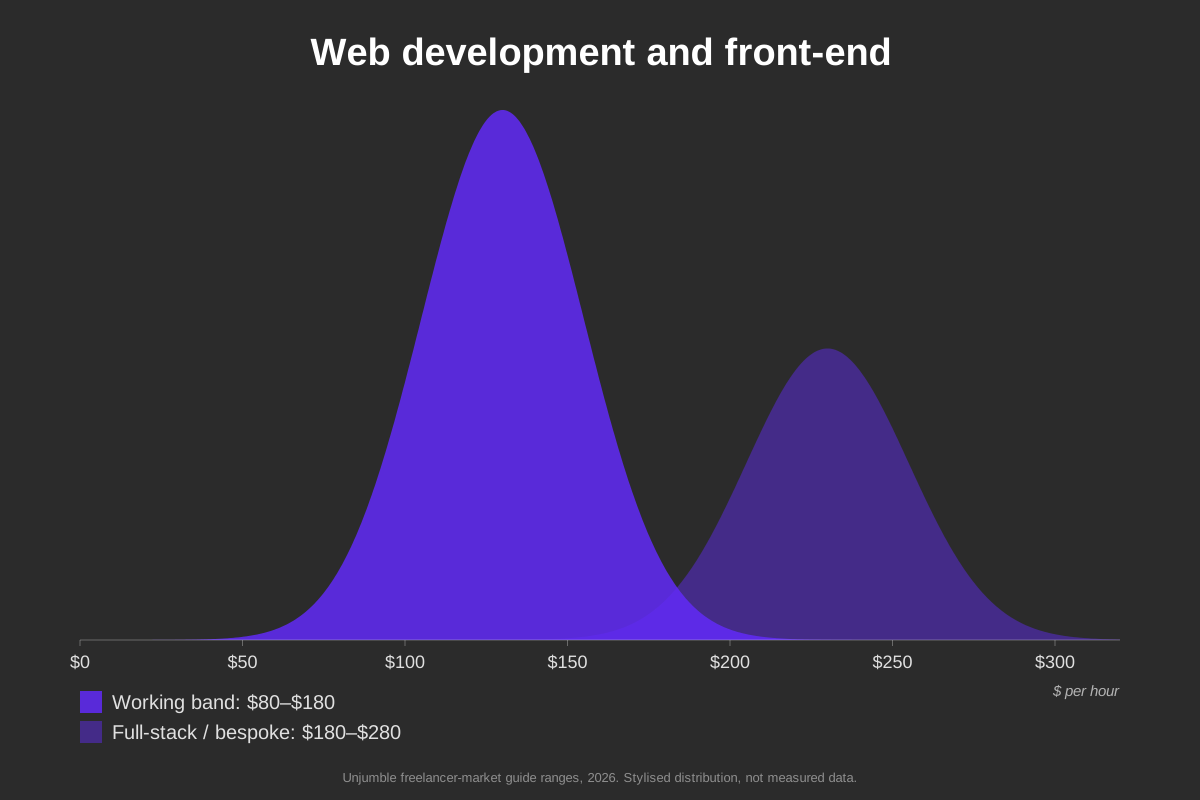
$80–$180/hr is the working band for most web developers.
Full-stack developers and those working in bespoke builds or integrations push past $200/hr regularly.
A complex small business website built to brief, with tight branding that elevates the business: $8,000–$20,000 is common. A simple small business website can be anywhere from $1,000–$6,000.
SEO and search
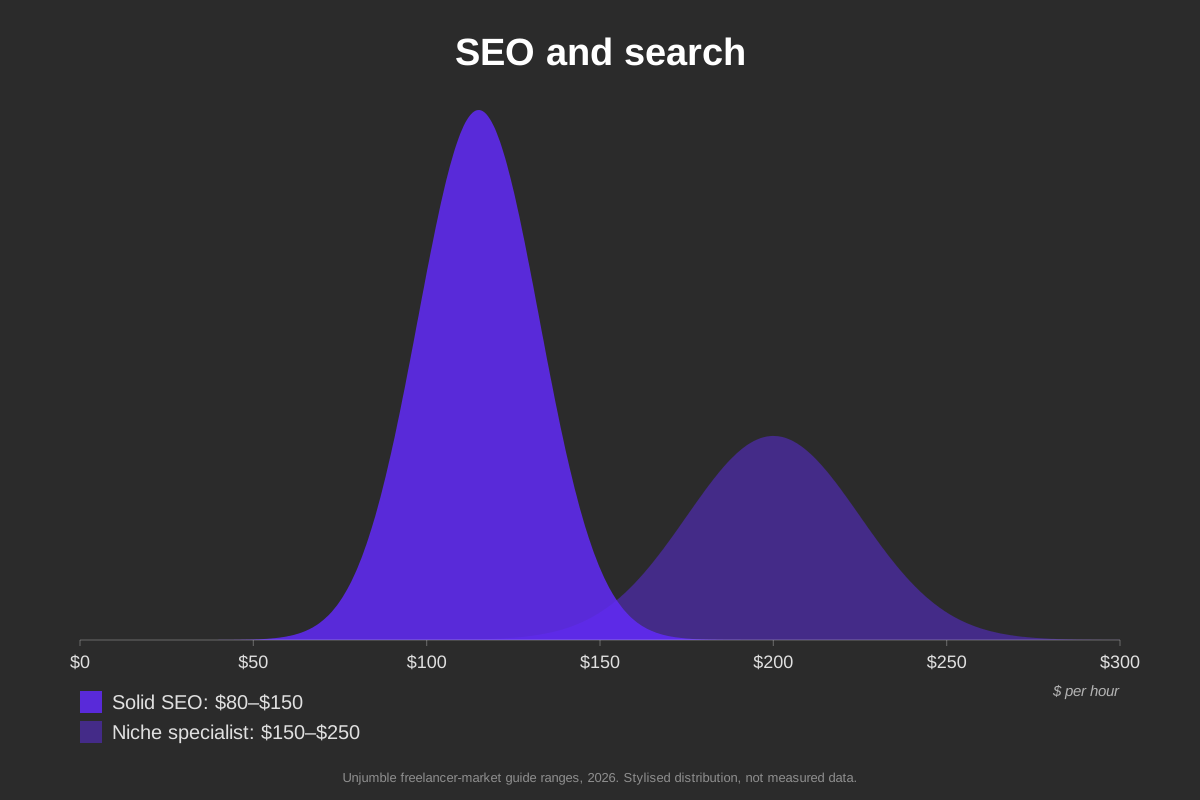
$80–$150/hr for solid SEO work.
Specialists with a clear track record in a niche (e-commerce, local SEO, technical audits) charge $150–$250/hr.
Monthly retainers are based on business size and ad spend starting anywhere from $500–$2,500/month and go up from there.
Social media and content
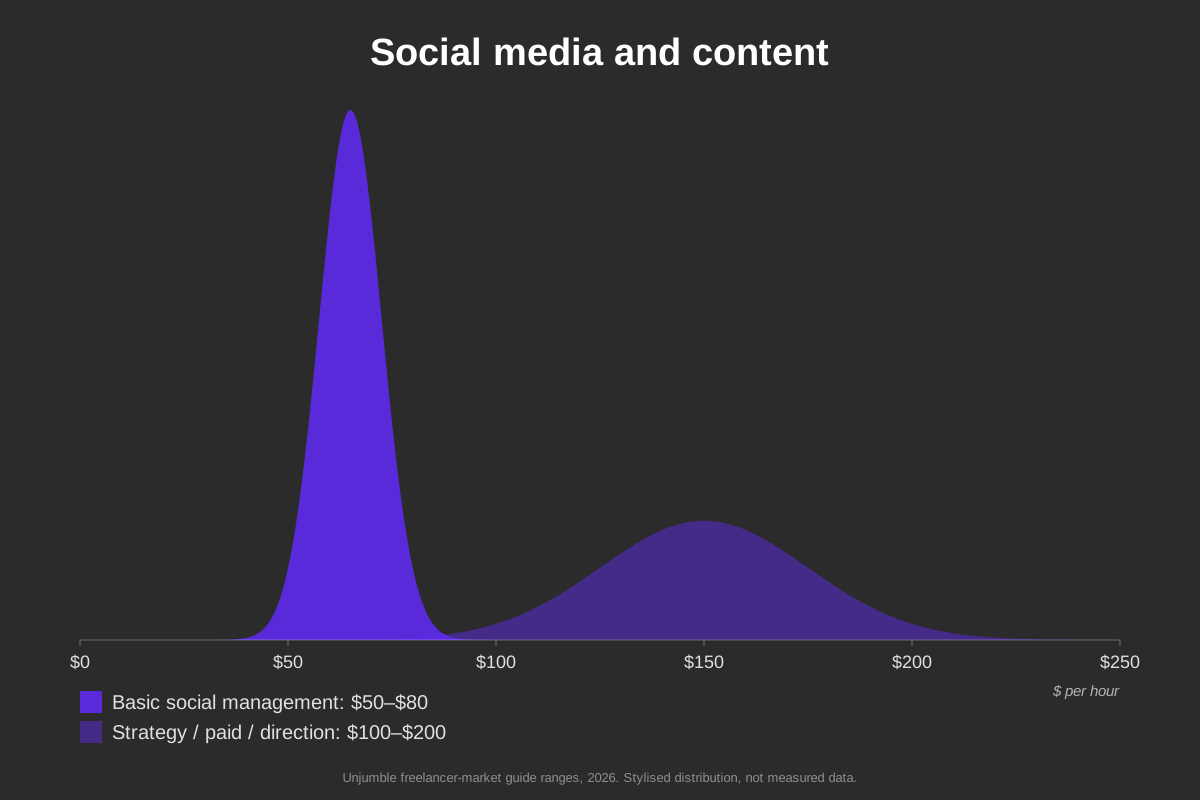
This is the widest band. Basic social management: $50–$80/hr.
Content strategy, paid social, or creative direction: $100–$200/hr.
Per-post pricing is common but often undersells the strategic thinking behind it.
Copywriting
$80–$150/hr for experienced copywriters. Long-form content, brand voice work, and campaign copy push higher.
Per-word pricing whilst common can be a trap: it rewards volume, not quality, and it trains clients to see your thinking as a commodity.

Videography and photography
Half-day rates: $800–$1,500+ depending on equipment, editing, and deliverables.
Drone operators and editors with post-production skills charge a premium.
Product photography is often outcome-based: $300–$600 per image once retouching is factored in.

Day rates or hourly: which to charge
Hourly suits ongoing work and anything with shifting scope. The client buys your time; you bill what you spend.
Day rates suit fixed engagements: shoots, workshops, on-site sessions. Clearer for the client upfront, and they protect you when a "quick job" runs over.
Quick math to get your day rate
Take your hourly rate. Multiply by 6 or 7, not 8. Most days lose at least an hour to setup, breaks, and admin even when you're billing the whole day.
For a half-day, charge 60% of your day rate, not 50%. Setup, travel, and scheduling overhead don't shrink just because the work does.
Why offshore rates don't set your floor
If you've priced your work and a client has come back with "I can get this done cheaper overseas," you've probably already felt the sting of that comparison. Here's the thing: it's not a fair comparison, and it's worth being able to say so calmly.
Australian freelancers bring a time-zone that works, direct communication, familiarity with local audiences, compliance awareness (think Australian consumer law, local standards, platform behaviour), and the ability to sit across a table or jump on a call without a 12-hour lag. For a small business trying to get something done this week, that's worth real money.
The small businesses burning themselves on offshore platforms aren't doing it because they love it. They're doing it because they don't know a better option exists. When they find one that works, they come back. Repeatedly.
Quality gets you the first gig. Reliability and communication get you the second, third, and fourth.
How experience actually shifts the number

Experience matters, but not in the way most freelancers think. Clients don't pay more because you've been freelancing for seven years. They pay more because you can demonstrate that your work produces a specific result.
"I've done a lot of brand work" is a soft claim. "I repositioned a regional produce business and they saw a 33% increase in market pricing confidence within a season" is a reason to pay more.
Every rate increase you want to justify needs a story behind it. Not a long one. One line that connects your work to a client's outcome.
If you don't have those stories yet, your next few gigs should be focused on building them, not just delivering the brief. Ask for the result. Follow up a month later. Collect the data.
The actual number: how to set yours
A few questions worth working through:
What does your day rate need to be? Take your desired annual income, add super, add tax, add the reality that you'll bill maybe 20–25 hours a week once admin, business development, and life are factored in. That number is usually higher than people expect. It's also usually honest.
What's the market rate for your category and experience? Use the ranges above as a starting point. Look at what's being posted and bid on in the market. Adjust for your city (Sydney and Melbourne typically push higher than regional rates for the same skill set).
Are you charging for thinking or just for doing? Strategy, creative direction, brand positioning — these don't get cheaper the faster you do them. If anything, speed is a sign of expertise. A flat-rate brief that takes you two hours because you're good at it should not cost less than the same brief taking someone else eight hours. Price the outcome, not the clock.
Have you raised your rates in the last 12 months? If not, you've effectively taken a pay cut. Inflation is real. Your costs have gone up. The market has moved.
See what's actually being budgeted
The ranges above are useful context. The live market tells the truer story.
Browse Gigs on Unjumble shows you what's posted and what the budgets look like. You see the kind of work Aussie businesses are actually trying to get done.

We help businesses set a sensible budget upfront, so the conversation between both sides starts on solid ground. Unjumble Assist (opt-in) gives small businesses a starting point when they don't know what something should cost.
Bids stay flexible. As a freelancer, you can pop in a bid above or below the initial budget. Every gig (whether Time-based or Outcome-based) runs on a Payment Schedule the freelancer proposes and both sides agree to.
So a browse isn't just about gigs to bid on. It's about seeing how the market prices the work, and where your rate sits in it.
Confidence is part of the price
The freelancers who consistently get hired at the higher end of a rate band share one habit: they quote with conviction, and have results/past work to back it up.
They don't apologise for the number. They don't pre-negotiate against themselves. They don't add "but I'm flexible" before the client has even responded. They name a rate, explain briefly what it covers, and let the client decide.
Most of the time, the client decides yes.
If you're undercharging, no one is going to tell you. The client will just keep booking you. The fix is yours to make.
Start by knowing the market. Then price where your work deserves to sit.
Thanks for reading.
Cheers,
Zac
-
Want more gigs? 'Sign up to Unjumble'. Every gig is from a verified Aussie business, with payment locked in Stripe before you start work.
Want to know more? Find out how it works. Local gigs, Aussie businesses, brief to final payment.
Note: every freelancer is different. Treat this as a starting point, not the only word on it.


