


2-modified%20(1).png)

If you've noticed your website traffic getting a bit soft lately, you're not imagining it. Something real has shifted in how people search for things online, and it's moving faster than most advice about it.
Google's AI Overviews now appear above organic results for millions of searches. ChatGPT and Perplexity have millions of users running searches directly through them.
And the thing about all these AI-generated answers?
They pull from a handful of trusted sources and summarise everything neatly in one box. The person reading never has to click through to anyone's website.
That's the new game. Not scary, but worth understanding before your competitors do.
What's actually changing (and what isn't)
The fundamentals of SEO haven't been scrapped. Google still crawls, indexes, and ranks pages the same way it always has. Getting that right still matters.
What's new is a second layer on top of that. AI systems are reading your content and deciding whether to use it as a source. That's Google's own Overviews and external tools like ChatGPT Search. If your content is clear, specific, and structured in a way the AI can parse, you've got a shot at being cited. If it's thin, vague, or buried behind five layers of navigation, you won't be.
The shift is less about ranking and more about being readable as a source of truth. That's a slightly different goal, and it changes what good content looks like.
Why this matters more for local and small businesses
For a big national brand, AI Overviews are mostly a traffic question. They've got enough brand recognition that people search for them by name anyway.
For a local business, it's more fundamental. When someone in Brisbane types "best bookkeeper for small business near me" or "local SEO consultant Sydney" into ChatGPT, the AI constructs an answer from whatever it's been trained on and whatever it can access. If your business doesn't have a clear, accurate, and findable presence, you're not in the conversation at all.
The good news is that most of your local competitors haven't thought about this yet. Small steps taken now carry more weight than the same steps taken in 18 months.
Three practical things to do right now
1. Write content that answers real questions
AI systems love direct answers. They're essentially looking for someone to have already answered the question clearly so they can quote it.
Think about what your customers actually ask. Not the questions you wish they'd ask, the ones they actually send you. What does something cost? How long does it take? What should they look for when choosing someone in your industry? What do you need to get started?
For example if you are a local florist in Sydney a piece of content you might write is around 'How to arrange my flowers at home'.
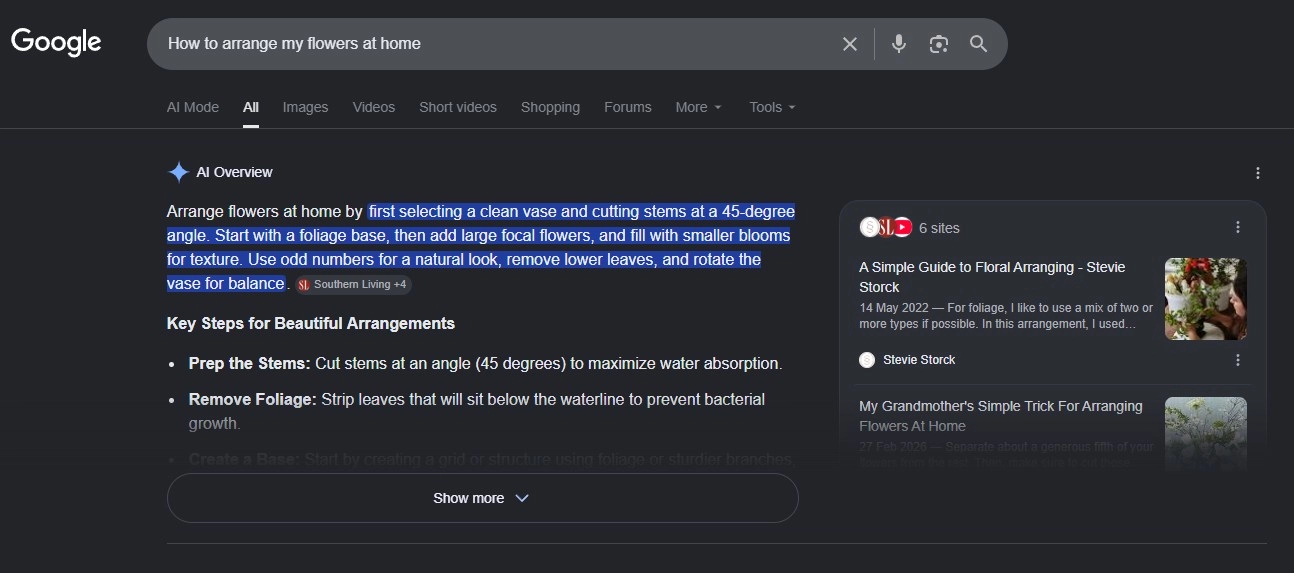
Write a short FAQ section on your website, or turn your most common customer questions into their own short pages. Keep the language plain and the answers direct. A paragraph per question is usually enough.
This is the single most effective piece of content work for AI visibility right now. It's also genuinely useful for your customers, which is never a bad reason to do something.
2. Claim and optimise your AI-readable listings
Your Google Business Profile is more important than it's ever been. Google pulls from it heavily for local AI Overviews, and it's one of the clearest signals that your business is real, active, and trustworthy.
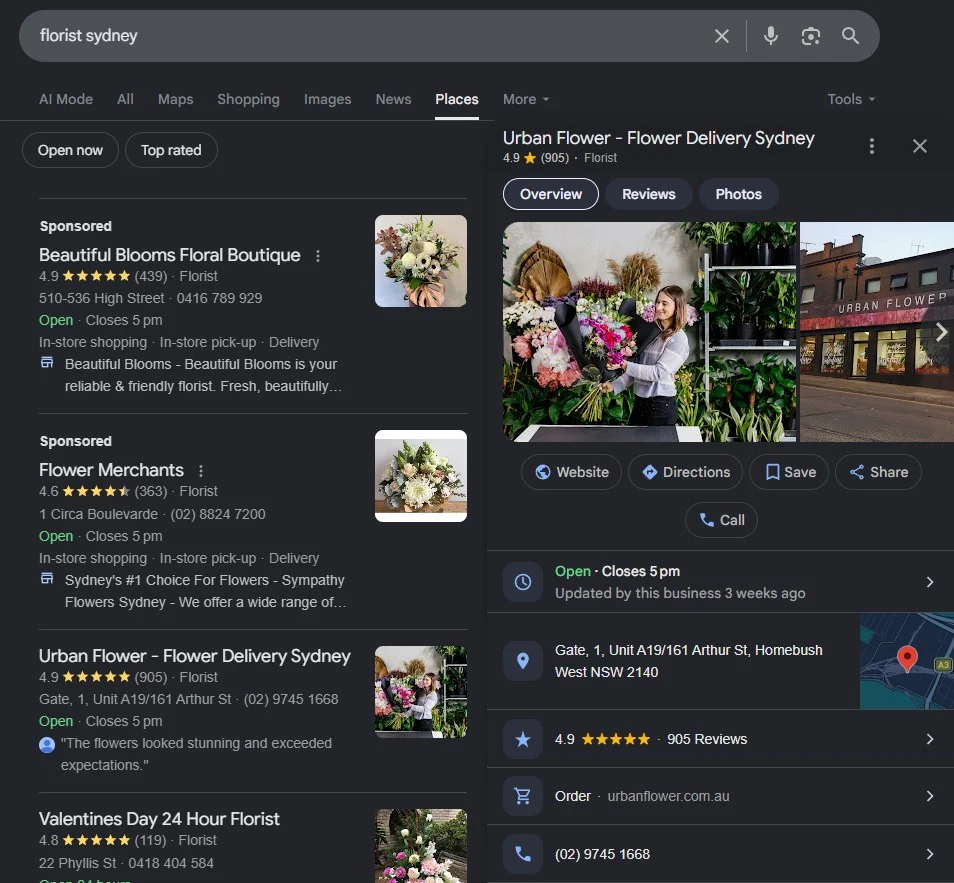
If you haven't touched yours in a while, have a look at it today. Make sure the name, address, phone number, and hours are accurate. Add photos from the last 12 months. Fill in every category field it offers. Write a proper business description that uses the language your customers actually search for, not the language you use internally.
You can read more about how to set up your Google Business Profile properly in our article 'How to create a Google Business Profile that stands out'.
Beyond Google, think about the other places your business information lives: Yelp, True Local, your industry association directory, any local chamber of commerce listings. Consistent, accurate information across all of them signals legitimacy to AI systems making judgements about whether to recommend you.
This isn't glamorous work, but it's foundational. And it's free.
3. Make your website content explicit and skimmable
AI systems don't read the way people do. They're looking for clear signals: headings that say what a section is about, opening sentences that get to the point, specific facts rather than vague claims.
A few things worth checking on your existing pages:
- Does your homepage clearly say what you do, where you do it, and who you do it for? Not implied. Stated directly.
- Do your service pages have headings that include the actual service name and location? "SEO services for Melbourne small businesses" is more useful to an AI than "What we do".
- Are there any pages where the most important information is buried three paragraphs down? Move it up.
None of this requires a redesign. It's mostly a copy edit. Read your pages as if you're an AI trying to extract a one-sentence summary of what each page is about. If you can't do it easily, rewrite the opening.
Where a local SEO freelancer fits in
Getting it right takes a few hours upfront and consistent attention after. Knowing what questions to answer, which terms to target, and where your content has gaps takes a feel for how Australians actually search.
Local nuance matters. Someone searching for a tradie in regional Queensland uses different language than someone in inner Melbourne, and AI is picking up on it.
If you haven't got the time, it's exactly the kind of gig that suits a freelance SEO specialist. Someone who knows Australian search behaviour and what Google's AI is looking for.

Unjumble homepage — a local freelance marketplace connecting Australian businesses with local SEO and AI visibility freelancers.
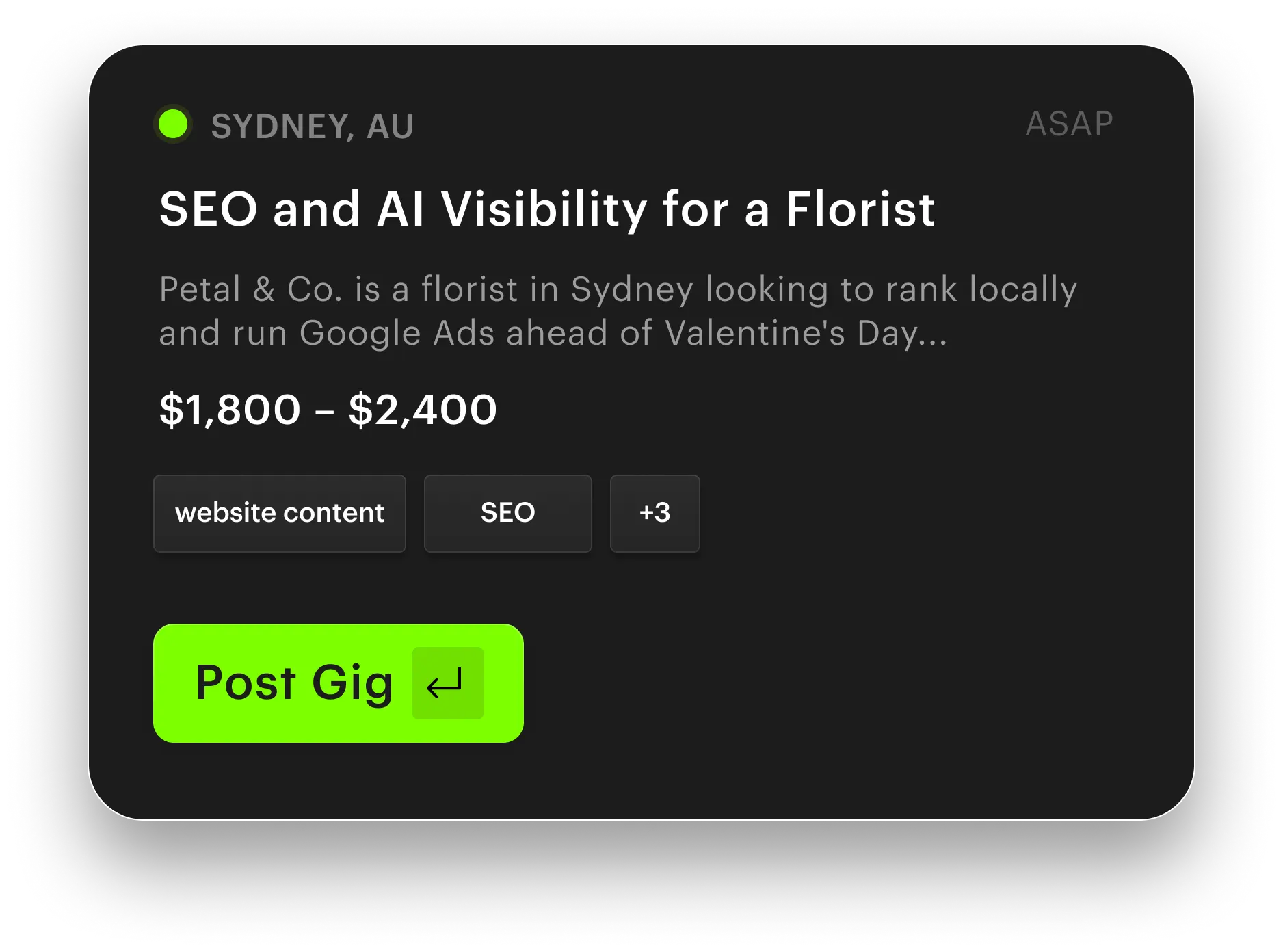
On Unjumble, post a gig in 60 seconds. Local Aussie freelancers bid with a quote, you pick the one that fits. No agency markup, no ongoing retainer you didn't ask for.
What this is and isn't
This piece is prep, not panic. AI Overviews and ChatGPT Search aren't replacing everything overnight. Plenty of searches still return traditional results. Plenty of people still click through to websites.
But the direction of travel is clear. More searches will end in an AI-generated answer. More buying decisions will be influenced by which businesses get cited in those answers. Getting your content, listings, and structure right now costs you an afternoon. Scrambling to catch up in two years costs considerably more.
Part 2 of this series goes deeper: structured data markup, entity SEO, and how to monitor whether you're actually showing up in AI-generated answers. That's the more technical side. But the three steps above are where to start.
Thanks for reading.
Cheers,
Zac
-
Need a hand? ‘Post a gig on Unjumble’ . Every freelancer is Aussie-based, vetted, and ready to bid in hours.
Want to know more? Find out how it work here. Local marketing freelancers, Australian businesses, brief to final payment.
Note: every business is different. Treat this as a starting point, not the only word on it.


